A student completing Medical Lab Technology at Belarani ParaMedical was placed in a private diagnostic centre before her certificate was printed. The centre had been looking for a trained technician for two months. They couldn’t find one.
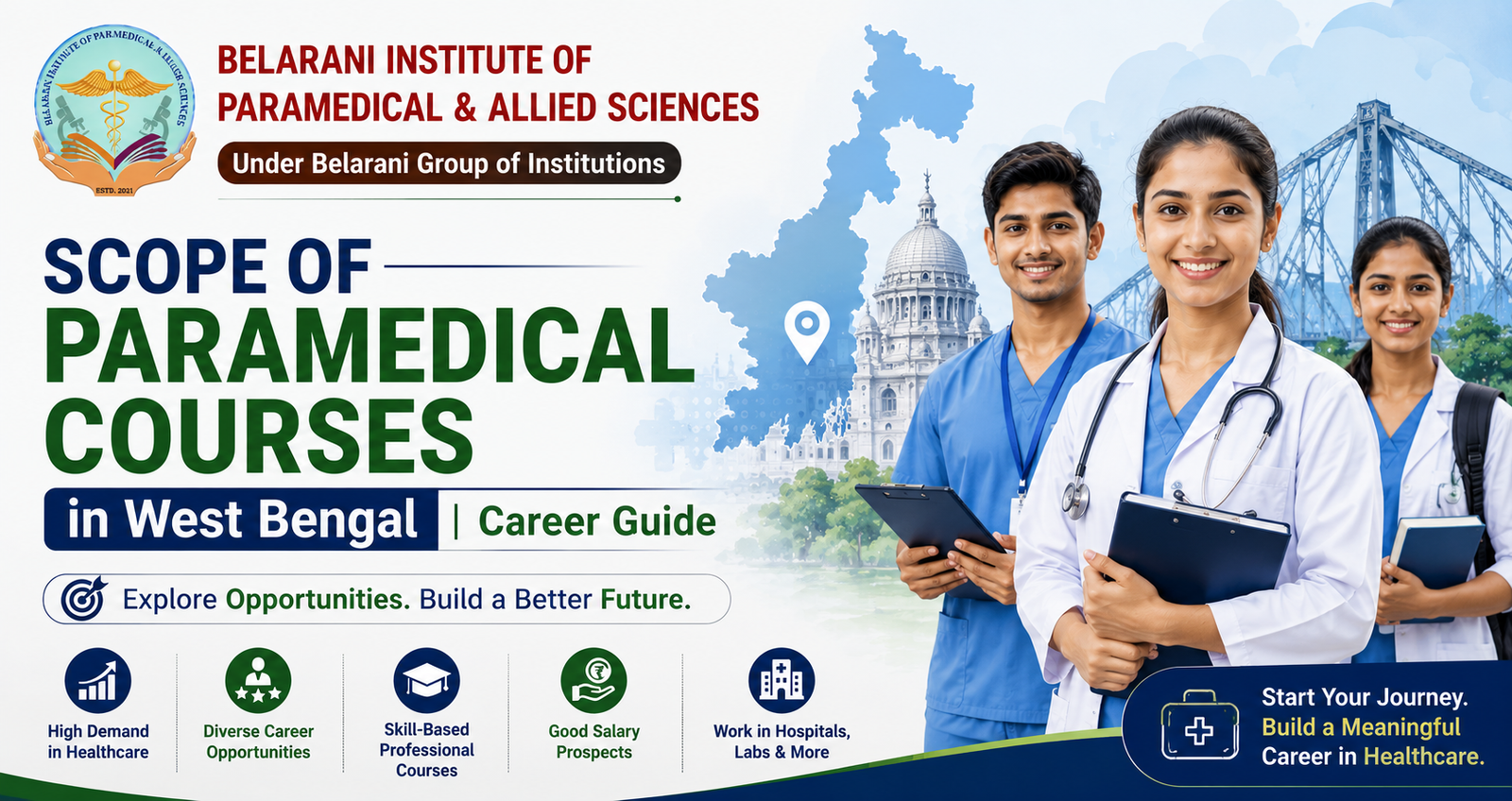
This is the situation we see regularly. West Bengal’s healthcare sector is growing and the supply of qualified graduates is not keeping up. For students who complete their training properly, the employment picture is strong.
Why Paramedical Scope Is Better Than Most Students Realise
Most career conversations in West Bengal default to MBBS or engineering. Paramedical gets a footnote. The job market is changing that.
Private healthcare expansion across Kolkata and districts like Siliguri, Durgapur, and Asansol has been significant. Each facility runs on trained paramedical staff. Students entering this market are walking into a sector that is actively looking for them.
Scope of Paramedical Courses in India: The Bigger Picture
India’s healthcare sector is one of the fastest-growing industries in the country. Hospitals, diagnostic centres, and specialised care facilities are expanding every year. The Ayushman Bharat push has added further demand for trained healthcare workers.
Paramedical professionals are central to this expansion. Every functional healthcare facility needs radiographers, lab technicians, physiotherapists, and dialysis technicians. Graduates from recognised programmes find employment across states, not just in West Bengal.
Paramedical Scope and Salary: What to Actually Expect
This is the question most students and families want answered honestly.
Entry-level salaries for paramedical professionals in West Bengal’s private sector typically range from twelve thousand to twenty-five thousand rupees per month depending on the specialisation and the facility. Lab technicians and radiology technicians in corporate diagnostic chains sit at the higher end of that range. Physiotherapists who build a client base can significantly exceed it.
Government positions through state health department recruitment offer lower starting salaries but come with job security, annual increments, and benefits that private positions don’t match.
With two to three years of experience the picture improves considerably. Senior technicians and supervisory roles in larger facilities command significantly more. Paramedical professionals who add certifications in specialised areas, critical care, advanced imaging, neonatal care, see their market value increase meaningfully.
The scope and salary combination is not spectacular at the entry level. It is real, growing, and significantly better than what a student sitting on their hands after Class 10 or Class 12 is earning.
Where Paramedical Graduates Are Finding Work
Private hospitals and nursing homes are the largest employer. Diagnostic chains like SRL and Thyrocare hire consistently. Government facilities recruit through competitive exams. Insurance companies employ health assessors. Medical equipment companies hire for technical support roles.
International employment is real. Gulf countries, UK, Canada, and Australia have active pipelines for trained Indian healthcare workers. The recognition process takes time but the financial outcomes are significantly better than domestic positions.
What Makes the Difference Between Getting Hired and Not
At Belarani ParaMedical we see the difference clearly.
Students who complete courses with strong clinical placement components get hired faster than students from programmes that were classroom-only. Employers in the diagnostic and hospital sector test practical skills at interview. A student who has handled real samples, operated real equipment, and worked in a real clinical environment is immediately distinguishable.
The second differentiator is the institution’s recognition. A certificate from an unrecognised or poorly affiliated institution looks fine until an employer checks it. We guide every student at Belarani ParaMedical through exactly what their qualification is worth and where it will be accepted before any decision is made.
FAQs:
What is the scope of paramedical courses in West Bengal?
Strong and growing. Private healthcare expansion across West Bengal has created consistent demand for trained paramedical professionals across multiple specialisations.
What is the scope of paramedical courses in India?
Significant. India’s healthcare sector expansion is one of the largest in the world and paramedical professionals are central to it. Graduates from recognised programmes find employment across states.
What is the salary in paramedical jobs?
Entry level twelve thousand to twenty-five thousand rupees per month in West Bengal’s private sector. Government roles offer stability and benefits. Experience and specialisation push earnings higher consistently.
Conclusion
The scope is real. The employment is there. What is missing for most students is the correct information about where they can go and how to get there.
Start That Journey at Belarani ParaMedical
Belarani ParaMedical provides recognised paramedical programmes with clinical training and career placement support built into every course.
If the right course and the right path aren’t clear, come and talk to us. We have placed graduates in hospitals, diagnostic centres, and government facilities across West Bengal. We know where the jobs are and what employers are actually hiring for.
Read More: