The healthcare industry in India is growing rapidly due to increasing healthcare awareness, the development of medical infrastructure, technological advancements, and the rising demand for quality patient care. While doctors and nurses play essential roles in treating patients, paramedical professionals are equally important in supporting medical diagnosis, treatment, rehabilitation, and emergency healthcare services.
Paramedical courses offer students an opportunity to build a rewarding career in the healthcare sector without pursuing an MBBS or other traditional medical degrees. These courses focus on developing practical skills and technical knowledge required to work in hospitals, diagnostic laboratories, emergency departments, operation theatres, and other healthcare facilities.
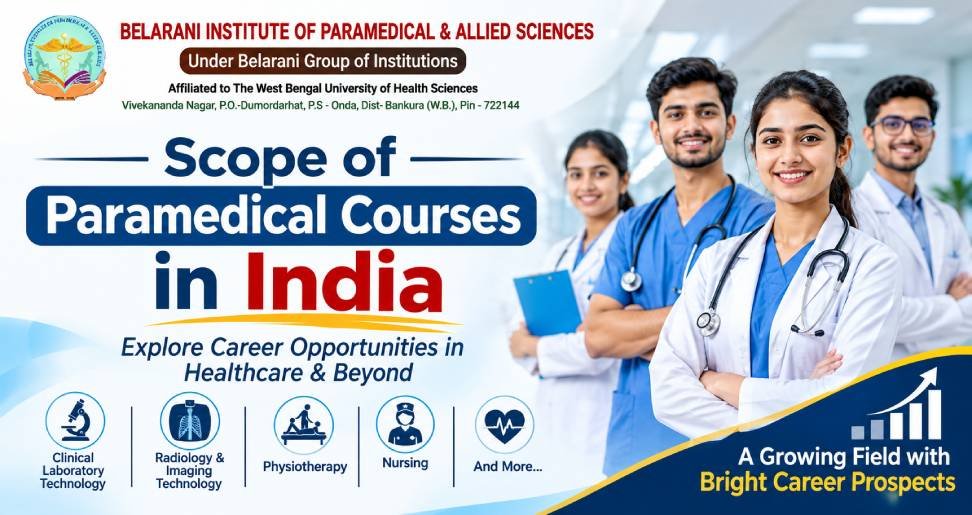
The scope of paramedical courses in India is expanding as hospitals, nursing homes, diagnostic centres, and specialised healthcare institutions require trained professionals. This makes paramedical education a promising career option for students interested in the medical field.
What Are Paramedical Courses?
Paramedical courses are professional healthcare programmes designed to train students in medical support services. These courses prepare individuals to assist doctors and other healthcare professionals in diagnosing diseases, monitoring patients, performing diagnostic procedures, and providing emergency medical support.
Depending on the course, students receive theoretical education along with practical training, laboratory experience, and clinical exposure.
Some popular paramedical courses in India include:
- Diploma in Medical Laboratory Technology (DMLT)
- Bachelor of Medical Laboratory Technology (BMLT)
- Diploma in Radiology and Imaging Technology
- Bachelor of Radiology and Imaging Technology
- Operation Theatre Technology
- Diploma in Dialysis Technology
- Emergency Medical Technology
- Optometry
- Physiotherapy
- Medical Record Technology
These programmes are available at diploma, undergraduate, and postgraduate levels, depending on the specialisation and institution.
Why Is the Scope of Paramedical Courses Increasing in India?
India’s healthcare sector is continuously developing, creating opportunities for skilled paramedical professionals. Several factors are contributing to the growing demand for trained healthcare technicians.
1. Growth of Hospitals and Healthcare Facilities
The number of private hospitals, government medical institutions, multispeciality hospitals, and speciality clinics is increasing across India. These facilities require trained professionals to manage diagnostic equipment, laboratory testing, patient monitoring, and medical procedures.
As healthcare infrastructure expands, the requirement for qualified paramedical professionals also increases.
2. Increasing Demand for Diagnostic Services
Accurate diagnosis is an important part of modern healthcare. Blood tests, urine examinations, pathology investigations, X-rays, CT scans, and MRI procedures help doctors identify medical conditions.
Medical laboratory technicians and radiology professionals support these diagnostic services. Consequently, students pursuing relevant paramedical courses can explore career opportunities in diagnostic laboratories and imaging centres.
3. Development of Advanced Medical Technology
Modern healthcare increasingly depends on advanced medical equipment and digital diagnostic systems. Professionals trained in operating and maintaining specialised equipment are required to support healthcare services.
Courses in medical imaging, laboratory technology, dialysis, and operation theatre technology help students develop relevant technical skills.
4. Growing Healthcare Awareness
People are becoming more aware of preventive healthcare, regular health check-ups, and early disease detection. This has increased the demand for diagnostic testing and medical support services, creating employment opportunities for trained professionals.
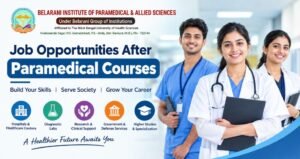
Top Career Opportunities After Paramedical Courses
One of the biggest advantages of paramedical education is the availability of different career paths. Students can select a specialisation based on their interests, qualifications, and professional goals.
1. Medical Laboratory Technician
Medical laboratory technicians work in diagnostic laboratories, hospitals, and pathology centres. They collect and process samples, conduct laboratory investigations, and assist in preparing test reports under appropriate supervision.
Students completing DMLT or BMLT can explore opportunities in this field.
2. Radiology and Imaging Technician
Radiology technicians assist in diagnostic imaging procedures such as X-rays and other imaging investigations, depending on their training and authorised scope of practice.
They generally work in hospitals, diagnostic imaging centres, and specialised healthcare facilities.
3. Operation Theatre Technician
Operation theatre technicians support surgical teams by preparing operation theatres, arranging instruments, maintaining sterile environments, and assisting during surgical procedures within their assigned responsibilities.
They can find employment in multispeciality hospitals and surgical centres.
4. Dialysis Technician
Dialysis technicians assist in providing dialysis services to patients with kidney-related conditions. Their responsibilities may include preparing dialysis equipment, monitoring treatment procedures, and supporting patient care under clinical supervision.
Hospitals and specialised kidney care centres offer opportunities in this field.
5. Emergency Medical Technician
Emergency medical technicians provide immediate medical assistance during emergencies and support patient transportation to healthcare facilities. They may work with ambulance services, emergency response organisations, and hospitals.
6. Optometry Professional
Optometry professionals are involved in vision assessment, eye health screening, and identifying common vision-related problems within their professional scope.
Career opportunities are available in eye hospitals, optical centres, and specialised vision care facilities.
Where Can Paramedical Professionals Work in India?
Paramedical qualifications can open doors to employment in several healthcare environments. Depending on their educational qualifications, practical training, and professional eligibility, graduates can explore opportunities in:
- Government hospitals and medical colleges
- Private and multispeciality hospitals
- Diagnostic and pathology laboratories
- Radiology and imaging centres
- Nursing homes and healthcare clinics
- Emergency medical and ambulance services
- Dialysis and specialised treatment centres
- Rehabilitation and physiotherapy centres
- Research laboratories and healthcare institutions
- Public health organisations
Some professionals may also explore opportunities in medical equipment companies, healthcare administration, and educational institutions after gaining relevant experience or additional qualifications.
Government and Private Sector Job Opportunities
Paramedical professionals can explore employment opportunities in both government and private healthcare sectors.
Government Sector: Government hospitals, medical colleges, public health laboratories, and other healthcare institutions periodically recruit eligible paramedical professionals. Recruitment generally depends on vacancies, educational qualifications, recognised certifications, and selection procedures.
Private Sector: Private hospitals, diagnostic chains, speciality clinics, pathology laboratories, and healthcare companies offer various employment opportunities. Private organisations may provide opportunities for fresh graduates as well as experienced professionals.
Candidates should regularly check official recruitment notifications and eligibility requirements before applying for government positions.
Salary Expectations After Paramedical Courses
Salary is an important consideration when selecting a professional course. The earning potential of paramedical professionals depends on their specialisation, qualification, practical experience, location, and employer.
Fresh graduates generally start with entry-level positions, while experienced professionals with specialised technical skills may receive better compensation.
The following table provides broad illustrative monthly salary ranges in India. Actual salaries vary between employers and locations.
| Job Role | Estimated Monthly Salary |
|---|---|
| Medical Laboratory Technician | ₹12,000–₹25,000 |
| Radiology Technician | ₹15,000–₹30,000 |
| Operation Theatre Technician | ₹13,000–₹28,000 |
| Dialysis Technician | ₹15,000–₹30,000 |
| Emergency Medical Technician | ₹12,000–₹25,000 |
| Optometry Professional | ₹15,000–₹35,000 |
These figures are indicative estimates, not guaranteed salary packages. Higher qualifications, experience, and specialised expertise can improve career prospects.
Higher Education Opportunities After Paramedical Courses
Paramedical education does not necessarily end after completing a diploma or bachelor’s degree. Students can pursue further studies to strengthen their knowledge and explore specialised career opportunities.
Depending on eligibility and institutional admission requirements, higher education options may include:
- Advanced diploma programmes in specialised healthcare fields
- Bachelor-level programmes after relevant diploma qualifications
- Master’s programmes in relevant allied health disciplines
- Specialised training and professional certification programmes
- Research-oriented and healthcare management programmes
Students should verify course recognition, university affiliation, eligibility, and professional requirements before choosing an institution.
Skills Required to Build a Successful Career in Paramedical Science
Academic qualifications are important, but practical abilities and professional behaviour also contribute to career growth.
Some essential skills include:
- Technical Knowledge: Understanding medical equipment, laboratory procedures, and diagnostic techniques.
- Communication Skills: Communicating effectively with patients, doctors, nurses, and healthcare teams.
- Attention to Detail: Following accurate procedures while handling samples, equipment, and patient information.
- Problem-Solving Ability: Identifying technical issues and following appropriate procedures.
- Teamwork: Coordinating with healthcare professionals to support patient care.
- Professional Ethics: Maintaining patient confidentiality, hygiene, safety, and responsible workplace practices.
Students should focus on practical training and clinical exposure to develop these skills during their education.
How to Choose the Right Paramedical Course?
Selecting the right paramedical course is an important decision for students planning a healthcare career. Before taking admission, consider the following factors:
- Choose a specialisation based on your interests and career objectives.
- Check the educational eligibility and admission requirements.
- Verify the institution’s recognition and university affiliation.
- Review the availability of laboratories and practical training facilities.
- Understand internship and clinical training opportunities.
- Check placement support and previous student outcomes.
- Compare course duration, fees, and future study options.
Choosing a suitable institution with proper infrastructure and practical exposure can help students develop the skills required for professional healthcare environments.
Conclusion
The scope of paramedical courses in India is promising because of the growing demand for diagnostic services, advanced medical technology, and trained healthcare support professionals. From medical laboratory technology and radiology to dialysis and operation theatre technology, students can explore several career opportunities according to their interests and qualifications.
Paramedical education provides a practical pathway into the healthcare industry and allows students to contribute to patient care and medical services. With the right course selection, quality education, hands-on training, and continuous skill development, students can build a stable and rewarding professional career.
For students looking to enter the healthcare sector, paramedical courses can be a valuable step towards a future in India’s expanding medical and allied healthcare industry.