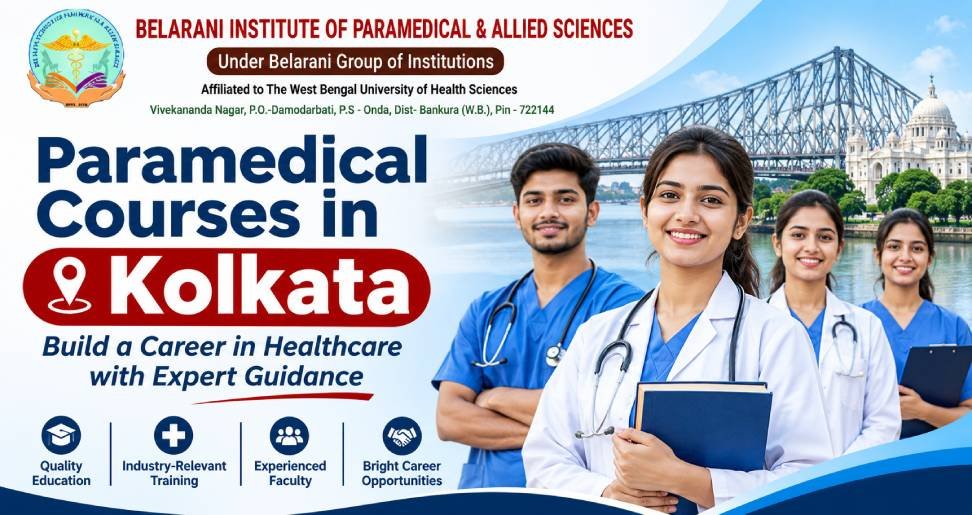
The healthcare industry is one of the fastest-growing sectors in India, creating a growing demand for skilled healthcare professionals. Along with doctors and nurses, paramedical professionals play an important role in providing quality healthcare services. From conducting laboratory tests and operating diagnostic equipment to assisting doctors during medical procedures, paramedical professionals support hospitals, clinics, and diagnostic centres in delivering effective patient care.
For students who want to build a career in the medical field without pursuing MBBS or other traditional medical degrees, paramedical education can be a suitable option. Kolkata, being one of the major educational and healthcare hubs in Eastern India, offers several opportunities for students interested in healthcare-related courses.
If you are planning to enter the healthcare industry, exploring different paramedical courses in Kolkata can help you identify a suitable educational path based on your interests, qualifications, and career goals.
What Are Paramedical Courses?
Paramedical courses are specialised educational programmes designed to prepare students for technical and supportive roles in the healthcare industry. These programmes combine theoretical knowledge with practical training to help students understand medical procedures, diagnostic techniques, patient care, and healthcare management.
Paramedical professionals generally work alongside doctors, nurses, and other healthcare specialists. Their responsibilities may include collecting samples, performing laboratory investigations, assisting in diagnostic procedures, maintaining medical equipment, and supporting patient care activities.
Depending on the course, students can pursue certificate, diploma, undergraduate, or postgraduate programmes in different paramedical specialisations.
Why Choose Paramedical Courses in Kolkata?
Kolkata has developed into an important centre for medical education and healthcare services. The city has several hospitals, diagnostic laboratories, medical institutions, and healthcare facilities that contribute to the demand for trained paramedical professionals.
Here are some reasons why students consider pursuing paramedical education in Kolkata.
1. Growing Healthcare Industry
The healthcare sector continues to expand with increasing demand for diagnostic services, specialised treatments, and patient care. This creates opportunities for trained professionals in hospitals, laboratories, nursing homes, and diagnostic centres.
2. Different Course Specialisations
Students can choose from various paramedical specialisations depending on their academic background and career interests. These include medical laboratory technology, operation theatre technology, radiology, dialysis technology, and other healthcare-related fields.
3. Practical Learning Opportunities
Paramedical education focuses on practical knowledge along with classroom learning. Depending on the institution and programme, students may receive laboratory training, clinical exposure, and supervised practical experience.
4. Multiple Career Opportunities
After completing an eligible paramedical qualification, students can explore employment opportunities in hospitals, diagnostic centres, pathology laboratories, healthcare facilities, and other medical organisations.
Popular Paramedical Courses to Consider
Before selecting an institution, students should understand the different specialisations available in paramedical education.
Some popular paramedical courses include:
1. Diploma in Medical Laboratory Technology (DMLT)
Medical Laboratory Technology is one of the widely pursued paramedical specialisations. It focuses on laboratory procedures used to examine blood, urine, tissue, and other biological samples.
Students learn about sample collection, laboratory equipment, testing procedures, and basic diagnostic techniques.
Career Opportunities:
- Medical Laboratory Technician
- Laboratory Assistant
- Pathology Lab Technician
- Diagnostic Laboratory Assistant
2. Bachelor of Medical Laboratory Technology (BMLT)
BMLT is an undergraduate programme that provides more detailed knowledge of medical laboratory science. It covers subjects such as clinical biochemistry, microbiology, pathology, haematology, and laboratory management.
Students develop technical skills required for laboratory investigations and diagnostic support.
Career Opportunities:
- Medical Laboratory Technologist
- Laboratory Supervisor
- Clinical Laboratory Professional
- Diagnostic Centre Technician
3. Diploma in Operation Theatre Technology
Operation Theatre Technology focuses on preparing students to assist healthcare professionals during surgical procedures.
The course generally covers operation theatre management, surgical instruments, sterilisation techniques, patient preparation, and infection control.
Career Opportunities:
- Operation Theatre Technician
- Surgical Assistant Technician
- Operation Theatre Assistant
- Hospital OT Support Staff
4. Diploma in Radiology and Imaging Technology
Radiology and Imaging Technology deals with medical imaging procedures used to support the diagnosis of different health conditions.
Students learn about imaging equipment, patient positioning, radiation safety, and diagnostic imaging techniques.
Career Opportunities:
- Radiology Technician
- Imaging Assistant
- X-ray Technician
- Diagnostic Imaging Centre Professional
5. Diploma in Dialysis Technology
Dialysis Technology is a specialised field that focuses on assisting in dialysis procedures for patients with kidney-related conditions.
Students learn about dialysis equipment, patient monitoring, infection prevention, and basic dialysis procedures under professional supervision.
Career Opportunities:
- Dialysis Technician
- Dialysis Unit Assistant
- Hospital Dialysis Support Professional
- Renal Care Centre Technician
Note: Course names, duration, eligibility, and recognition may vary between institutions. Students should verify the applicable regulatory requirements before admission.
Eligibility Criteria for Paramedical Courses
Eligibility requirements depend on the course, institution, and admission guidelines. However, many paramedical programmes have some common educational requirements.
Generally, students may need:
- Completion of Class 10 or Class 12 from a recognised board, depending on the programme.
- Science subjects such as Physics, Chemistry, and Biology for many technical programmes.
- Minimum qualifying marks as specified by the institution.
- Additional entrance examinations or admission procedures, wherever applicable.
Some diploma programmes may have different eligibility requirements. Therefore, students should check the official admission guidelines of their preferred institution before applying.
Duration of Paramedical Courses
The duration of paramedical programmes varies depending on the qualification and specialisation.
| Course Type | General Duration |
|---|---|
| Certificate Courses | A few months to 1 year |
| Diploma Courses | 1–2 years |
| Undergraduate Courses | 3–4 years |
| Postgraduate Courses | 1–2 years |
The actual duration may differ depending on the university, course structure, internship requirements, and applicable regulations.
Career Opportunities After Completing Paramedical Courses
Paramedical education can open doors to different career opportunities in the healthcare sector. Qualified candidates may apply for suitable positions based on their educational qualifications, practical training, and professional eligibility.
Some common employment sectors include:
1. Hospitals: Hospitals employ paramedical professionals in laboratories, operation theatres, imaging departments, dialysis units, and other specialised departments.
2. Diagnostic Centres: Diagnostic facilities require trained professionals to assist with laboratory investigations and medical imaging services.
3. Pathology Laboratories: Students with relevant laboratory qualifications can explore opportunities in pathology and clinical testing laboratories.
4. Nursing Homes and Clinics: Smaller healthcare facilities may recruit trained paramedical staff for technical and patient-support responsibilities.
5. Healthcare Institutions: Experienced professionals may explore opportunities in medical colleges, research laboratories, and specialised healthcare organisations.
With additional qualifications and relevant experience, professionals can also explore advanced training and specialised career pathways.
How to Choose the Right Paramedical Institute in Kolkata?
Selecting the right institution is an important step towards building a successful career in healthcare. Students should not make admission decisions based only on course fees or advertisements.
Consider the following factors before choosing an institute:
- Recognition and Affiliation: Verify whether the institution and selected programme have the required recognition, approval, or affiliation.
- Experienced Faculty: Check the academic qualifications and teaching experience of the faculty members.
- Practical Training: Look for institutions that provide suitable laboratory facilities and supervised practical learning.
- Course Curriculum: Understand the subjects, training structure, examinations, and internship requirements.
- Placement Assistance: Check whether the institution provides career guidance, placement support, or industry exposure.
- Student Support: Consider admission assistance, academic support, and access to learning resources.
A well-researched decision can help students select a programme that matches their educational background and future career plans.
Why Consider Belarani Paramedical for Your Healthcare Education?
Students looking for healthcare education opportunities can explore Belarani Paramedical to learn about available programmes and admission-related information.
Choosing a suitable paramedical programme requires understanding the course curriculum, eligibility requirements, practical training opportunities, and future career possibilities.
Before enrolling, students should review the institution’s programme details, applicable approvals, facilities, and admission requirements to make an informed decision.
Whether you are interested in medical laboratory technology or another healthcare specialisation, selecting the right educational pathway is an important step towards developing professional skills.
Conclusion
Paramedical education offers students an opportunity to develop technical skills and explore different career paths in the healthcare industry. With the growing importance of diagnostic services, laboratory investigations, surgical assistance, and specialised patient care, trained paramedical professionals continue to play an essential role in healthcare delivery.
For students interested in pursuing paramedical courses in Kolkata, understanding the available specialisations, eligibility criteria, course duration, and career opportunities is important before making an admission decision.
Take time to research different programmes, compare institutions, and select a course that aligns with your interests and long-term professional goals. The right education and practical training can help you take the first step towards a rewarding career in the healthcare sector.