Paramedical courses have become a popular choice for students who want to build a career in the healthcare sector without pursuing a traditional medical degree. These courses provide practical knowledge and specialized skills required to support doctors, nurses, surgeons, and other healthcare professionals. With the healthcare industry expanding across hospitals, diagnostic centres, laboratories, clinics, and emergency care facilities, there are several job opportunities after paramedical courses.
From laboratory technology and radiology to emergency care and physiotherapy assistance, paramedical professionals play an important role in patient care and medical diagnosis. For students interested in healthcare, paramedical education can provide multiple career pathways.
What Are Paramedical Courses?
Paramedical courses are educational programs designed to train students in various healthcare support services. These courses focus more on practical and technical skills than on diagnosing and treating patients independently.
Depending on the program, students may learn about medical laboratory procedures, diagnostic imaging, patient monitoring, emergency care, medical equipment, rehabilitation, or other specialized healthcare services.
Students can choose certificate, diploma, undergraduate, or other recognized programs depending on their educational qualifications and career goals.
Why Choose a Paramedical Career?
Healthcare services require a large team of professionals to ensure smooth and efficient patient care. Doctors depend on trained healthcare support staff for diagnostic testing, imaging, laboratory work, emergency assistance, and technical procedures.
A paramedical career can be attractive because it combines healthcare knowledge with practical training. Students can develop specialized skills and work in different healthcare environments.
Another advantage is the variety of career options available. Instead of limiting themselves to one type of role, qualified paramedical professionals can explore hospitals, laboratories, diagnostic centres, rehabilitation facilities, clinics, and other healthcare organizations.
Top Job Opportunities After Paramedical Courses
The specific career options depend on the course and specialization completed by the student. Some of the common job opportunities after paramedical courses include:
1. Medical Laboratory Technician
Medical laboratory technicians assist in collecting, preparing, and testing clinical samples under appropriate supervision. Their work may involve blood, urine, tissue, and other laboratory specimens.
They can find employment in hospitals, diagnostic laboratories, pathology centres, and healthcare facilities.
2. Radiology and Imaging Technician
Radiology professionals assist with diagnostic imaging procedures using relevant medical equipment. Depending on their training and role, they may work with technologies used for X-rays and other imaging procedures.
These professionals are often employed by hospitals, diagnostic centres, imaging clinics, and healthcare institutions.
3. Emergency Medical Technician
Emergency medical technicians provide immediate assistance during medical emergencies and help transport patients safely to healthcare facilities. Their training may include first aid, patient monitoring, emergency response, and basic life-support procedures.
This career can be suitable for individuals who are comfortable working in fast-paced medical environments.
4. Operation Theatre Technician
Operation theatre technicians help prepare the operating room, surgical instruments, and other equipment required during medical procedures. They work closely with surgeons, nurses, and other members of the surgical team.
Hospitals and surgical centres are common workplaces for trained operation theatre professionals.
5. Physiotherapy Assistant
Physiotherapy assistants support physiotherapists in patient care and rehabilitation activities. Their responsibilities may include preparing treatment areas, assisting with exercises, maintaining equipment, and helping patients follow prescribed rehabilitation routines.
They may work in hospitals, rehabilitation centres, clinics, and wellness facilities.
6. Dialysis Technician
Dialysis technicians work with specialized equipment used for dialysis treatment and assist healthcare teams in monitoring patients during procedures. Their role requires technical knowledge, attention to detail, and proper handling of medical equipment.
They may find career opportunities in hospitals, dialysis centres, and specialty healthcare facilities.
7. ECG Technician
ECG technicians assist in conducting electrocardiogram tests that record the electrical activity of the heart. They prepare patients, operate ECG equipment, and support healthcare professionals by ensuring that recordings are properly obtained.
Hospitals, diagnostic centres, and cardiac care facilities may hire trained ECG technicians.
8. Medical Imaging Assistant
Students trained in imaging-related paramedical programs can explore roles supporting diagnostic imaging services. Their responsibilities may include patient preparation, equipment assistance, maintaining records, and following safety procedures.
Career opportunities can be available in hospitals and diagnostic centres.
Where Can Paramedical Professionals Work?
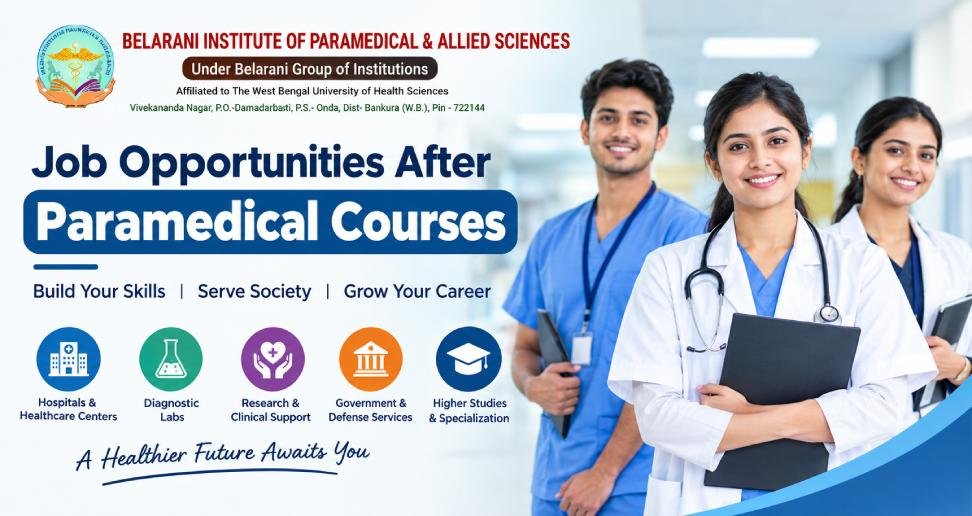
One of the major benefits of paramedical education is the wide range of workplaces available. Depending on their qualification and specialization, professionals may work in:
- Government and private hospitals
- Diagnostic and pathology laboratories
- Imaging and scanning centres
- Emergency medical services
- Rehabilitation centres
- Specialty clinics
- Nursing homes
- Research and healthcare institutions
- Home healthcare services
- Medical colleges and healthcare organizations
The actual job role and eligibility requirements can vary depending on the qualification, employer, and applicable professional regulations.
Skills Needed for a Successful Paramedical Career
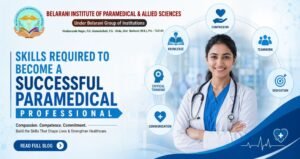
A qualification alone is not always enough to build a strong career in healthcare. Students should also develop professional and technical skills that help them work effectively in medical environments.
Important skills include communication, teamwork, attention to detail, patient handling, technical knowledge, time management, and the ability to remain calm in emergency situations.
Computer skills and basic knowledge of medical documentation can also be useful, as many healthcare facilities use digital systems for patient records, reports, scheduling, and diagnostic information.
Career Growth After Paramedical Courses
The career path after completing a paramedical course does not necessarily stop at an entry-level position. Professionals can gain experience, pursue advanced education, obtain additional certifications where appropriate, and specialize in a particular area.
For example, a laboratory professional may build expertise in a specialized diagnostic field, while an imaging professional may advance through further training and experience in diagnostic technology.
Career growth can also involve moving into supervisory, administrative, teaching, or specialized technical positions, depending on qualifications and professional requirements.
How to Choose the Right Paramedical Course
Choosing the right course is an important step toward building a long-term healthcare career. Students should consider their interests, academic background, preferred work environment, course duration, practical training, recognition or accreditation, and future career options.
It is also useful to understand the subjects covered in the program and the type of clinical or practical exposure provided by the institution.
Students should avoid choosing a course only because it appears popular. Instead, they should select a specialization that matches their interests and career goals.
Conclusion
There are many job opportunities after paramedical courses for students who want to enter the healthcare sector through a specialized technical or support role. Careers in laboratory technology, radiology, emergency care, operation theatre assistance, dialysis, ECG, and rehabilitation are among the options available depending on the chosen qualification.
As healthcare organizations continue to require trained support professionals, paramedical education can provide students with practical skills and several possible career directions. The right course, proper training, practical experience, and continuous skill development can help students build a meaningful career in the healthcare industry.
Before enrolling, students should carefully research the course, institution, eligibility criteria, recognition, practical training, and career pathways to make an informed educational decision.