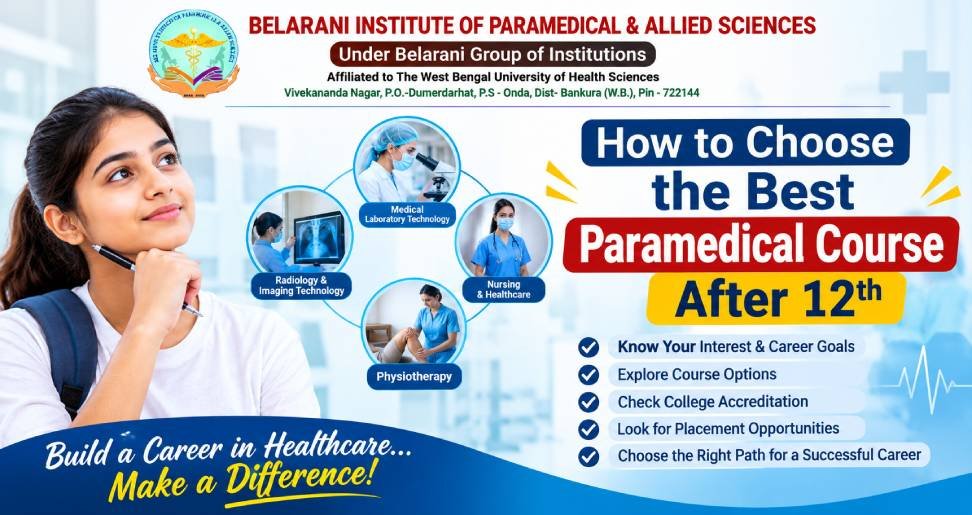
Choosing the right career after completing Class 12th is an important decision for every student. While many students prefer traditional career options such as engineering, medicine, and management, the healthcare industry offers several other rewarding opportunities. One such option is pursuing a paramedical course after 12th.
Paramedical courses focus on developing practical healthcare skills that support doctors, nurses, and other medical professionals in diagnosing, treating, and caring for patients. These courses offer opportunities in diagnostic laboratories, hospitals, emergency care units, rehabilitation centres, and other healthcare facilities.
However, with so many courses available, students often find it difficult to decide which one is suitable for their interests and career goals. In this guide, we will explain how to choose the best paramedical course after 12th, the available options, eligibility requirements, and important factors to consider before taking admission.
1. Understand What Paramedical Courses Are
Paramedical courses are professional healthcare programmes designed to train students in different medical and diagnostic procedures. Unlike doctors, who primarily diagnose and prescribe treatments, paramedical professionals provide essential technical and clinical support.
These professionals play an important role in the healthcare system. They help doctors identify medical conditions, operate diagnostic equipment, collect laboratory samples, assist during emergencies, and support patient recovery.
Some popular areas of paramedical education include:
- Medical Laboratory Technology
- Radiology and Medical Imaging Technology
- Operation Theatre Technology
- Dialysis Technology
- Emergency Medical Technology
- Physiotherapy
- Optometry
- Anaesthesia Technology
Understanding these specialisations will help you identify which field matches your interests and abilities.
2. Explore the Best Paramedical Courses After 12th
Before selecting a course, students should explore the available options and understand what each programme offers. Different paramedical courses prepare students for different healthcare responsibilities.
Here are some popular options to consider.
DMLT is a popular option for students interested in laboratory science and medical testing. The course provides knowledge about collecting, processing, and examining biological samples.
Students learn about:
- Blood and urine testing
- Clinical pathology
- Microbiology
- Biochemistry
- Laboratory equipment handling
After completing DMLT, students can explore opportunities as laboratory technicians, pathology assistants, and diagnostic laboratory professionals, subject to applicable qualifications.
Diploma in Radiology and Imaging Technology
Radiology and Imaging Technology is suitable for students interested in medical imaging and diagnostic equipment. Professionals in this field assist with imaging procedures that help doctors examine internal body structures.
The course generally covers:
- X-ray technology
- Imaging equipment
- Patient positioning
- Radiation safety
- Basic medical imaging procedures
Graduates may find opportunities in hospitals, diagnostic centres, and medical imaging facilities.
Diploma in Operation Theatre Technology
Operation Theatre Technology is designed for students who want to work in surgical environments. Students learn how to prepare operation theatres, maintain equipment, and assist the surgical team.
Important learning areas include:
- Surgical instruments
- Operation theatre preparation
- Sterilisation procedures
- Infection prevention
- Patient monitoring basics
This course can lead to career opportunities in hospitals and surgical centres.
Diploma in Dialysis Technology
Dialysis Technology focuses on supporting patients who require dialysis treatment due to kidney-related conditions.
Students gain knowledge about dialysis machines, patient preparation, infection control, and treatment procedures under professional supervision.
Career opportunities may include dialysis technician and dialysis unit assistant roles, depending on qualifications and institutional requirements.
Diploma in Emergency Medical Technology
Emergency Medical Technology is suitable for students interested in emergency healthcare services. It focuses on providing immediate medical assistance and supporting patients during critical situations.
Students learn about:
- Basic emergency response
- First aid
- Patient transportation
- Vital sign monitoring
- Emergency equipment handling
This field offers opportunities in emergency departments, ambulance services, and healthcare facilities.
3. Check Your Eligibility After Class 12th
Eligibility is one of the most important factors when choosing a paramedical course.
Most paramedical programmes require students to complete Class 12th from a recognised educational board. However, subject requirements can differ depending on the course and institution.
Generally:
- Students from the Science stream with Physics, Chemistry, and Biology (PCB) can apply for many paramedical programmes.
- Some courses may accept students with Mathematics or other subject combinations.
- Certain diploma programmes may have different eligibility requirements.
- Some institutions may require entrance examinations or merit-based admission.
Before applying, carefully check the eligibility criteria, minimum marks, age requirements, and admission process of the institution.
4. Identify Your Interests and Career Goals
Selecting a course only because it is popular is not always the right decision. You should understand your interests and identify the type of healthcare work you would enjoy.
For example:
- If you enjoy laboratory experiments, DMLT may be a suitable option.
- If you are interested in medical equipment and imaging, consider Radiology Technology.
- If you prefer working in surgical environments, explore Operation Theatre Technology.
- If you are interested in kidney care, Dialysis Technology may be worth considering.
- If you enjoy working in fast-paced situations, Emergency Medical Technology could be an option.
Choosing a course according to your interests can make your learning experience more engaging and help you develop relevant professional skills.
5. Compare Course Duration and Fees
Course duration and fees are also important considerations when selecting a paramedical programme.
Different institutions offer diploma, certificate, and degree-level programmes. Their duration and fee structures may vary depending on the specialisation, facilities, practical training, and institutional recognition.
| Course Type | General Duration |
|---|---|
| Certificate Courses | A few months to 1 year |
| Diploma Courses | 1–3 years |
| Undergraduate Degree Courses | Generally 3–4 years |
Note: These are general duration ranges. The actual duration depends on the programme and applicable academic regulations.
Before taking admission, compare the total course fees, examination charges, laboratory fees, internship expenses, and other additional costs.
Do not select an institution simply because it offers the lowest fees. Quality education and practical training should remain your priorities.
6. Check College Recognition and Practical Training Facilities
Choosing the right institution is just as important as choosing the right course.
A good paramedical institute should provide proper academic guidance, practical learning facilities, and opportunities to understand real healthcare environments.
Consider checking the following factors:
Institutional Recognition: Verify whether the institution and programme have the required recognition or approval from the relevant authority, university, or affiliating body.
Practical Laboratories: Students should have access to suitable laboratories and medical equipment related to their specialisation.
Hospital Training: Practical exposure through hospital internships or clinical training can help students understand professional responsibilities.
Experienced Faculty: Qualified teachers and experienced healthcare professionals can improve the learning experience.
Placement Assistance: Check whether the institute provides career guidance, placement support, or internship assistance.
Always verify institutional claims before paying admission fees.
7. Understand Career Opportunities After Completing the Course
The healthcare sector requires trained professionals in different diagnostic and clinical support departments. Completing a recognised paramedical qualification can help students explore several career opportunities.
Some potential job roles include:
- Medical Laboratory Technician
- Radiology Technician
- Operation Theatre Technician
- Dialysis Technician
- Emergency Medical Technician
- ECG Technician
- Patient Care Assistant
Depending on the qualification and applicable requirements, students may explore employment in:
- Government and private hospitals
- Diagnostic laboratories
- Multispeciality healthcare centres
- Nursing homes
- Emergency medical services
- Specialised treatment centres
With additional qualifications, experience, and professional development, students can also explore opportunities for career advancement.
8. Consider Future Growth and Higher Education
A good career decision should consider not only your first job but also your future development.
After completing a diploma-level paramedical programme, eligible students may pursue advanced courses or higher education in their chosen specialisation.
For example, students interested in laboratory technology may explore advanced laboratory science programmes, while those interested in imaging can consider further education in medical imaging.
However, admission to higher-level programmes depends on the eligibility criteria and academic regulations of the respective institutions.
Continuous learning, practical experience, and technical knowledge can help professionals develop their careers in the healthcare sector.
9. Avoid Common Mistakes While Selecting a Paramedical Course
Many students make career decisions without researching the course or institution properly. Avoid these common mistakes:
- Choosing Only Based on Fees: Affordable education is important, but course quality should not be compromised.
- Ignoring Recognition: Always verify the institution’s approval and course validity.
- Not Checking Practical Training: Healthcare education requires hands-on learning.
- Following Friends: Your course should match your own interests and career goals.
- Believing Guaranteed Job Claims: Be careful with unrealistic placement and salary promises.
- Ignoring Future Education: Check whether the qualification allows you to pursue further studies.
Taking time to research these factors can help you make a more informed decision.
Conclusion
Choosing the best paramedical course after 12th requires careful consideration of your interests, educational background, career goals, course duration, fees, and institutional recognition. Whether you choose Medical Laboratory Technology, Radiology, Operation Theatre Technology, Dialysis Technology, or Emergency Medical Technology, each specialisation offers a different learning experience and potential career pathway.
The most important thing is to select a course that provides quality education, practical exposure, and recognised qualifications. Research different institutions, compare their facilities, and understand the admission requirements before making your final decision.
Start your healthcare career with the right educational foundation. Explore paramedical courses at Belarani Paramedical and take an informed step towards your professional future.