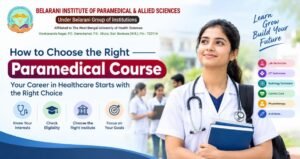
A student came to us at Belarani Paramedical having spent nearly a year doing nothing after Class 10. Her family assumed she needed Class 12 before anything in healthcare was possible. She assumed the same.
She didn’t. She was eligible for three different programmes the day she walked in.
This is the conversation we have constantly. Students in West Bengal finishing school and sitting on their hands for a year or more because nobody told them the paramedical door was already open. This guide is the thing we wish every student and parent had read before the waiting started.
Why Paramedical Gets Overlooked?
The healthcare career conversation in most West Bengal families starts and ends with MBBS or nursing. Everything else gets dismissed as less serious. Less structured. Less worth pursuing.
That view is inaccurate and it costs student’s time.
The radiographer, the lab technician, the ECG specialist, the dialysis technician. Healthcare systems don’t function without these roles. The demand across West Bengal’s private diagnostic centres, nursing homes, and government hospitals is real and it is growing. The salaries are not pocket money. The employment is not casual.
Eligibility for Paramedical Courses: The Actual Requirements
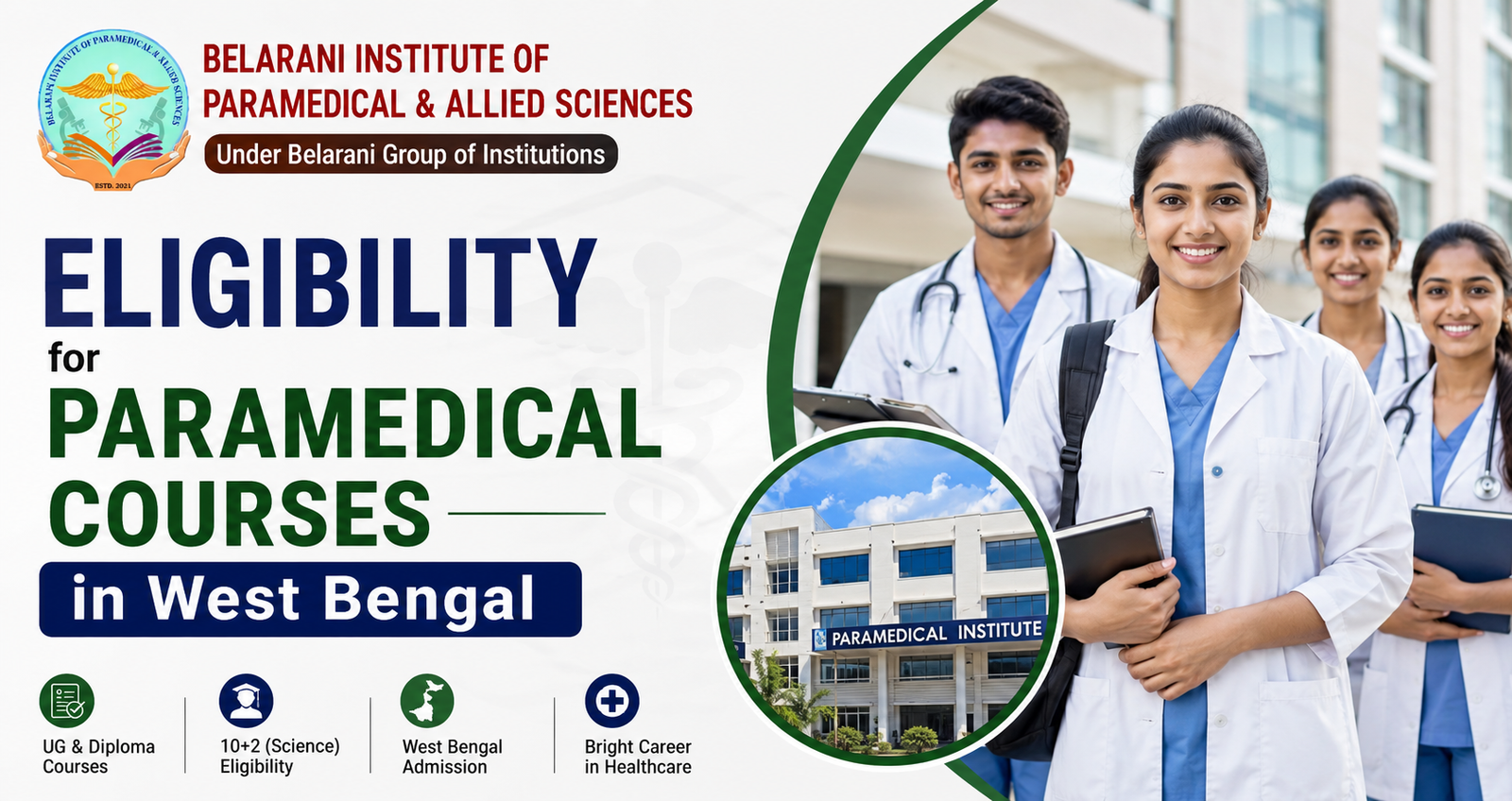
The honest answer is that requirements are lower than most people assume. And they differ significantly by course level.
For certificate and basic diploma programmes, a Class 10 pass from a recognised board is the threshold. Most programmes accept students between 17 and 28. Some ask for 40 to 45 percent in the qualifying examination. Others have no percentage requirement at the entry level at all.
For degree-level programmes, Class 12 with Physics, Chemistry, and Biology or Mathematics is required. Most West Bengal institutions want 45 to 50 percent at this level. A handful of programmes, Physiotherapy and Optometry specifically, also require an entrance examination on top of that.
The common mistake is assuming everything requires Class 12. Certificate and diploma programmes don’t.
Paramedical Eligibility After 10th: This Is the Overlooked Part
A Class 10 pass opens the door to several legitimate, employment-generating programmes immediately. Not eventually. Now.
Medical Laboratory Technology is a one-year certificate course and one of the most consistently in-demand qualifications in private diagnostic centres across Kolkata and district hospitals throughout West Bengal. ECG and Cardiac Care Technology. X-ray and Radiography. Operation Theatre Technology. Dental Assistant programmes.
These are structured courses with clinical training included. They lead to employed positions, not internship arrangements. Students who complete these at Belarani ParaMedical are working in healthcare within six months in most cases. That is not marketing. That is what we see.
Paramedical Courses List: What Is Actually Available?
At diploma and degree level the range is wider than most students expect.
Medical Laboratory Technology remains the highest-demand qualification consistently. Radiology and Imaging Technology has expanded significantly as diagnostic imaging has become central to clinical practice. Physiotherapy at diploma and degree level. Operation Theatre Technology for students drawn to the surgical environment. Cardiac Care and Dialysis Technology, both growing in demand as chronic disease prevalence increases. Optometry, Neurophysiology Technology, and Health Information Management for students with different interests and aptitudes.
Duration ranges from one year to three years or more depending on the level. Entry requirements vary by programme. Employment profiles are different across specialisations. The right choice is specific to the student, not universal.
Before Enrolling: What Actually Matters?
Check the affiliation. Not every paramedical institution in West Bengal offers a qualification that employers will recognise. A certificate from an unaffiliated institution is a document without weight. At Belarani ParaMedical we tell students before they enrol exactly what their qualification will and will not be accepted for. Not after fees are paid.
Demand clinical placement. Classroom-only paramedical training produces graduates who know what procedures look like but cannot perform them under pressure. Every programme at Belarani ParaMedical includes hands-on clinical exposure because that is what makes the difference in a job interview.
Look at where the course leads. A one-year certificate with strong and consistent employment outcomes may genuinely serve a student better than a two-year diploma that leads to a narrower job market. Ask the institution where their graduates are working, not just what their graduates earned.
FAQs:
What is the eligibility for paramedical courses in West Bengal?
Class 10 pass for certificate and diploma entry. Class 12 Science for degree-level courses. Age between 17 and 28 in most cases. Percentage requirements vary by institution and programme.
Can I start a paramedical course after Class 10?
Yes. Medical Lab Technology, ECG Technology, X-ray Technology, OT Technology, and Dental Assistance all start after Class 10. No waiting for Class 12 results.
What is the full list of paramedical courses available?
Lab Technology, Radiology, Physiotherapy, OT Technology, Cardiac Care, Dialysis, Optometry, Neurophysiology, and Health Information Management are among the main programmes in West Bengal.
Conclusion
Most students sitting idle after Class 10 were already eligible for a healthcare career. The gap between “I don’t know what to do” and a clear paramedical pathway is usually just information.
Belarani Paramedical: Where the Right Course Starts?
Belarani ParaMedical provides recognised certificate and diploma programmes across West Bengal with clinical training built into every course and career support from enrolment through employment.
If the right course isn’t clear, come and talk to us. We will tell you exactly what you qualify for and where it leads before any decision is made.
Read More: