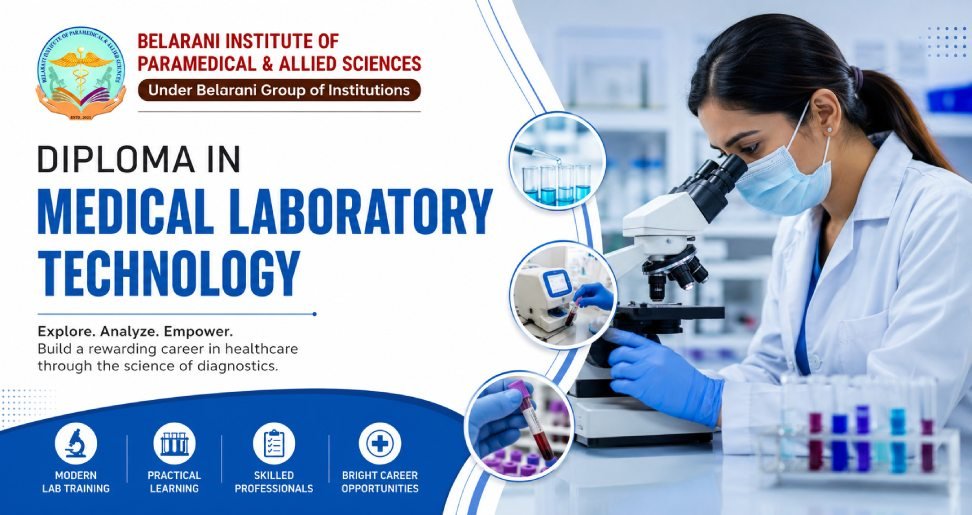
Healthcare is one of the fastest-growing industries, and behind every accurate diagnosis is a skilled medical laboratory professional. A Diploma in Medical Laboratory Technology is an excellent career option for students who want to work in the healthcare sector without pursuing a lengthy medical degree. This diploma equips students with the practical knowledge and technical skills required to perform laboratory tests that assist doctors in diagnosing and treating diseases
If you’re looking for a career that offers stability, growth, and the opportunity to contribute to patient care, enrolling in a Diploma in Medical Laboratory Technology program can be a smart decision. Choosing a reputed institute like Belarani Paramedical Institute can help you build a strong foundation and prepare you for a rewarding future in medical diagnostics.
What is a Diploma in Medical Laboratory Technology?
A Diploma in Medical Laboratory Technology (DMLT) is a professional paramedical course designed to train students in laboratory science and diagnostic procedures. The program focuses on the collection, testing, analysis, and reporting of biological samples such as blood, urine, tissues, and other body fluids.
Medical laboratory technicians play a crucial role in healthcare by providing accurate test results that enable doctors to make informed medical decisions.
Why Choose a Diploma in Medical Laboratory Technology?
The demand for qualified laboratory technicians continues to rise due to the growing need for diagnostic services in hospitals, clinics, pathology laboratories, and research institutions.
Some major benefits of pursuing this diploma include:
- Strong career opportunities in healthcare
- Shorter course duration compared to many medical programs
- Hands-on practical training
- High demand across public and private healthcare sectors
- Opportunities for higher education and specialization
- Stable and respected profession
With advancements in medical technology, laboratory professionals are becoming increasingly important in disease detection and patient care.
Eligibility Criteria
Although admission requirements may differ between institutions, the general eligibility criteria include:
- Completion of Class 10+2 from a recognized board
- Science background is generally preferred
- Minimum qualifying marks as specified by the institute
Students who have an interest in biology, chemistry, and healthcare often find this course highly suitable.
Course Duration
The Diploma in Medical Laboratory Technology usually takes 2 years to complete, followed by practical or internship training depending on the institute’s curriculum.
The program combines classroom learning with laboratory sessions, allowing students to gain practical exposure to modern diagnostic techniques.
Subjects Covered in the Course
The curriculum is designed to provide both theoretical knowledge and practical laboratory skills. Common subjects include:
- Human Anatomy and Physiology
- Clinical Biochemistry
- Microbiology
- Hematology
- Pathology
- Histopathology
- Immunology
- Blood Banking
- Clinical Laboratory Techniques
- Medical Ethics
- Laboratory Management
- Quality Control
Students also receive extensive practical training to develop confidence in handling laboratory equipment and diagnostic procedures.
Skills You Will Develop
A Diploma in Medical Laboratory Technology helps students build essential professional skills, including:
- Sample collection and handling
- Laboratory safety practices
- Diagnostic testing procedures
- Operation of laboratory instruments
- Data recording and reporting
- Analytical thinking
- Attention to detail
- Communication skills
- Teamwork
- Problem-solving abilities
These competencies are highly valued by employers in the healthcare industry.
Career Opportunities After Diploma in Medical Laboratory Technology
Graduates have access to diverse employment opportunities in both government and private sectors.
Some common job roles include:
- Medical Laboratory Technician
- Laboratory Assistant
- Pathology Lab Technician
- Blood Bank Technician
- Microbiology Technician
- Biochemistry Technician
- Clinical Laboratory Executive
- Diagnostic Centre Technician
- Research Laboratory Assistant
- Laboratory Quality Control Technician
The healthcare sector continues to create new opportunities as diagnostic services become more advanced and accessible.
Industries That Hire Medical Laboratory Technicians
After completing the diploma, graduates can find employment in:
- Government Hospitals
- Private Hospitals
- Diagnostic Laboratories
- Pathology Centres
- Blood Banks
- Medical Colleges
- Research Laboratories
- Pharmaceutical Companies
- Biotechnology Companies
- Public Health Departments
- Healthcare Startups
The wide range of employment sectors makes this diploma a versatile career choice.
Higher Education Options
Students who wish to enhance their qualifications can pursue advanced studies after completing the diploma.
Popular options include:
- B.Sc. in Medical Laboratory Technology
- Bachelor of Medical Laboratory Science
- Specialized Certification Courses
- Hospital Management Programs
- Healthcare Administration Courses
Higher education can improve career prospects and open doors to supervisory or managerial positions.
Why Practical Training Matters
Medical laboratory technology is a skill-based profession. Practical training allows students to:
- Handle modern laboratory equipment
- Understand diagnostic protocols
- Learn quality assurance practices
- Develop confidence in performing laboratory tests
- Gain real-world experience before entering the workforce
Employers often prefer candidates with strong practical exposure, making hands-on training an essential part of the course.
Why Choose Belarani Paramedical Institute?
Selecting the right institute plays a significant role in shaping your career. Belarani Paramedical Institute focuses on providing students with quality education, practical laboratory exposure, and industry-oriented training.
Students benefit from:
- Experienced faculty members
- Well-equipped laboratory facilities
- Practical skill development
- Career-focused curriculum
- Supportive academic environment
- Guidance for internships and career opportunities
The institute aims to prepare students with the technical knowledge and confidence required to succeed in the healthcare industry.
Whether your goal is to work in a diagnostic laboratory, hospital, or pursue higher education, Belarani Paramedical Institute offers an excellent learning environment to help you achieve your career aspirations.
Career Growth and Salary Prospects
Medical laboratory professionals enjoy steady career growth as they gain experience and additional certifications.
Factors influencing salary include:
- Educational qualifications
- Practical experience
- Employer type
- Location
- Technical specialization
With continuous learning and skill enhancement, professionals can progress into senior laboratory positions, quality management, laboratory supervision, or specialized diagnostic roles.
Future Scope of Diploma in Medical Laboratory Technology
The future outlook for laboratory professionals remains highly positive due to:
- Increasing healthcare infrastructure
- Rising demand for preventive healthcare
- Growth of diagnostic laboratories
- Expansion of medical research
- Technological advancements in laboratory diagnostics
- Greater awareness of regular health screening
Medical laboratory technicians will continue to play an indispensable role in modern healthcare systems.
Tips for Students Before Enrolling
Before choosing a Diploma in Medical Laboratory Technology program, consider the following:
- Verify institute recognition and approvals.
- Check the availability of practical laboratory training.
- Review the curriculum to ensure it aligns with industry standards.
- Look for internship and placement support.
- Evaluate the experience of the teaching faculty.
- Visit the campus and laboratory facilities if possible.
Making an informed decision can significantly impact your career development.
Conclusion
A Diploma in Medical Laboratory Technology is an excellent choice for students seeking a practical, rewarding, and in-demand healthcare career. The course equips learners with the technical expertise required to support accurate diagnosis, patient care, and medical research.
Choosing a trusted institution like Belarani Paramedical Institute can provide the right blend of theoretical knowledge, hands-on training, and career guidance needed to thrive in the healthcare sector. With the increasing demand for skilled laboratory professionals, this diploma offers a promising pathway toward long-term career success and professional growth.