Students come in with one question. Which course should I do? And they expect a quick answer.
The honest version takes a bit longer. Because paramedical isn’t one course. It’s a broad category of healthcare education covering lab work, imaging, surgery support, physiotherapy, cardiac care, dialysis, and more. Each has different eligibility requirements, different durations, and leads somewhere different after graduation.
Getting these wrong wastes a year or two. Getting it right sets up a career that’s actually in demand.
How Many Years Is Paramedical
Six months at the short end. Four years at the long end.
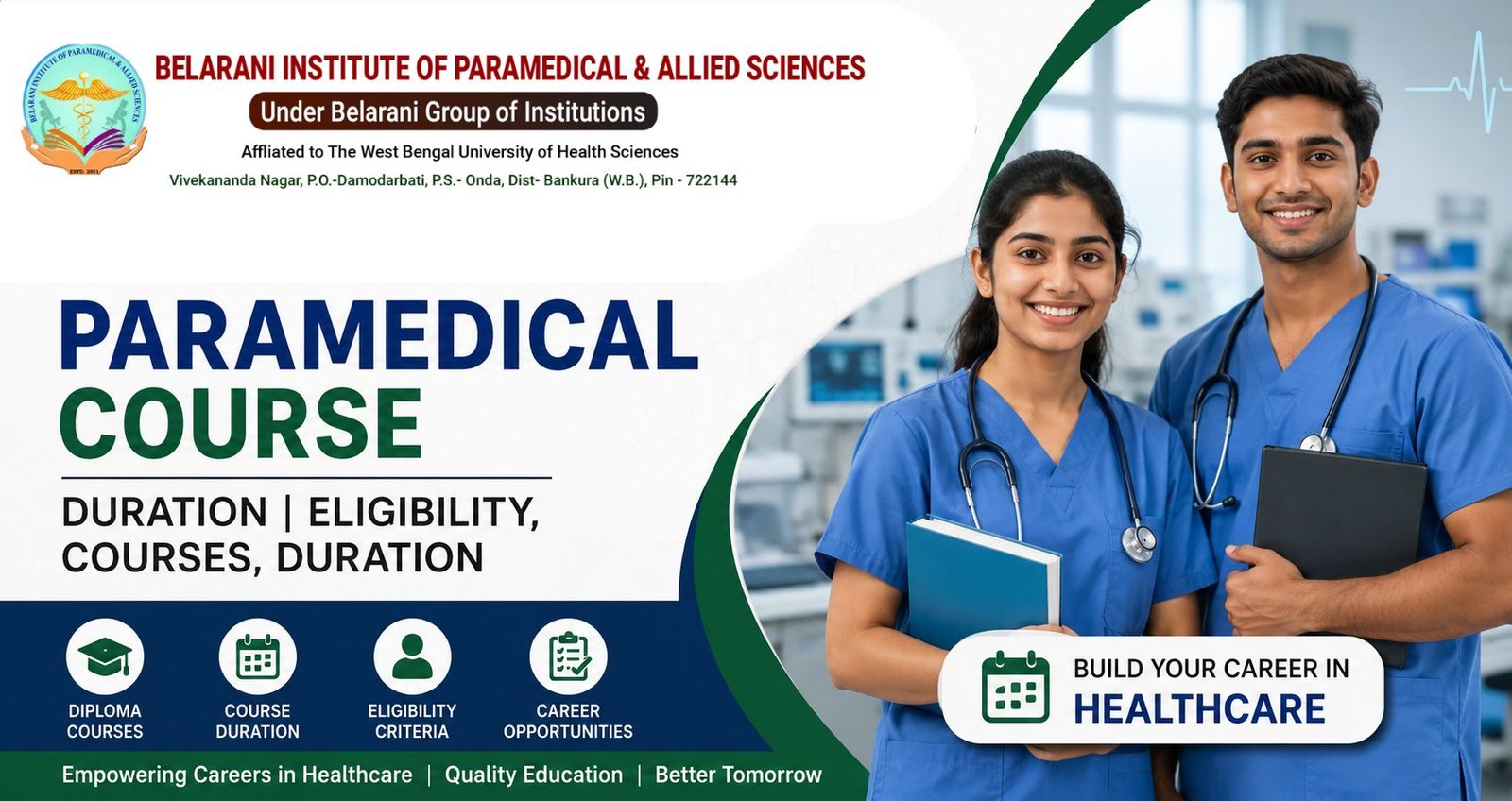
Most students land somewhere in the middle, which is the diploma range, one to two years. But let’s go through all three levels because the difference matters.
Certificate courses are six months to a year. They cover specific technical skills, basic lab work, emergency care support, health records. Fast entry into work. Good for someone who needs to be earning quickly or is adding to qualifications they already have. Not the deepest preparation but genuinely useful for the right person.
Diploma courses are where most students end up and honestly, for most career goals, it’s the right call. One to two years, solid clinical knowledge, practical training, and recognised by hospitals and healthcare settings that are actively hiring. DMLT, Diploma in Radiology, Diploma in OT Technology, Diploma in ECG Technician. These programs have been producing employed graduates for years.
Degree programs are the longer route. B.Sc Paramedical, three to four years including internship. More time, more investment, more options on the other end. Senior roles, government job eligibility, postgraduate study, supervisory positions in diagnostic departments. For some students this is the right call. For others, a two-year diploma gets them where they want to go faster.
Nobody should pick the shortest option just because it’s shortest. Nobody should pick the degree just because it sounds more impressive. The duration should match the goal.
Paramedical Course Eligibility
Start with what you have.
10+2 is the minimum for most programs. The stream matters for some courses and not others. Science with Physics, Chemistry, Biology is preferred, sometimes required, for clinical and lab-based programs. The more hands-on the course, the more likely PCB is expected.
Arts and Commerce students aren’t shut out. Health management, medical records, administrative programs often accept any stream. It depends on the course.
For degree programs, PCB at 10+2 is standard. Most institutions ask for between 45 and 55 percent minimum. A few are more flexible, a few are stricter.
Age limits are typically 17 to 25 for most programs. Working professionals returning to study often find exceptions available if they look.
At Belarani Paramedical, eligibility is assessed student by student rather than applied as a blanket rule. Someone who doesn’t qualify for their first-choice course often qualifies for another program that gets them to the same career outcome.
Which Paramedical Course Is Best?
Lab Technology, radiology, physiotherapy. OT Technology, dialysis, cardiac Technology.
All of them listed here are good. In different ways for different people.
Lab Technology: The DMLT or B.Sc MLT route, is in demand everywhere. Every diagnostic lab, every hospital, every clinic. Blood work, pathology, microbiology. The shortage of trained lab technicians is real and not going away. Two years for the diploma, three for the degree.
Radiology: Ithas been strong for years and keeps getting stronger. More hospitals, more imaging centres, more diagnostic requirements. CT, X-ray, MRI, ultrasound. Two-year diploma. Graduates find work.
Physiotherapy: It is four years plus six months internship, the longest route in this list. But the only paramedical course with a realistic private practice pathway. Sports rehab, post-surgical care, elderly care. Demand growing. Long-term prospects are better than most.
OT Technology: The operation theatre route is genuinely specialised. Surgical instrument management, sterilisation, patient positioning, theatre support. Two years. Graduates go directly into surgical departments. Not glamorous in the way some courses sound. In consistent demand.
Dialysis Technology: It is specific enough that the competition for jobs is lower than broader programs. Kidney disease cases are climbing. Trained dialysis technicians are needed. Two years. Niche, but a good niche.
Cardiac Technology: It covers ECG, Holter monitoring, stress testing, cardiac support. One to two years depending on the level. Hospitals need these roles filled and trained people are in shorter supply than the demand would suggest.
Think Before You Choose
What do you actually want to do at work every day?
Not what sounds good. What you’d be comfortable doing for years. Lab work is quiet and methodical. Patient-facing roles are different entirely. Know which appeals before committing.
How long can you study?
Be honest about this. Family situation, finances, what’s realistic. A two-year diploma that gets completed is better than a three-year degree that doesn’t.
What does after graduation look like? Government job? Private hospital?
Your own practice someday? Some courses aim at one of these better than others.
Belarani Paramedical has people who can help work through these questions. Not to push a particular course, but to figure out which one actually fits the student asking.
FAQs:
How many years is paramedical?
Six months to four years. Certificate is shortest, diploma is middle, degree is longest.
Which paramedical course has best job prospects?
MLT, Radiology, and OT Technology have strong placement. Physiotherapy wins for long-term growth.
What is the eligibility for paramedical courses?
10+2 for most programs. PCB preferred for clinical courses.
One Last Thing
The paramedical field is genuinely short of trained professionals and that’s not changing soon. Whatever course fits your situation, there is work at the end of it. The question is just making sure the course matches where you want to go.
Belarani Paramedical offers diploma and degree programs across the main paramedical disciplines with practical training and placement support. If the course decision is still the question, that’s the place to start.
Read More: