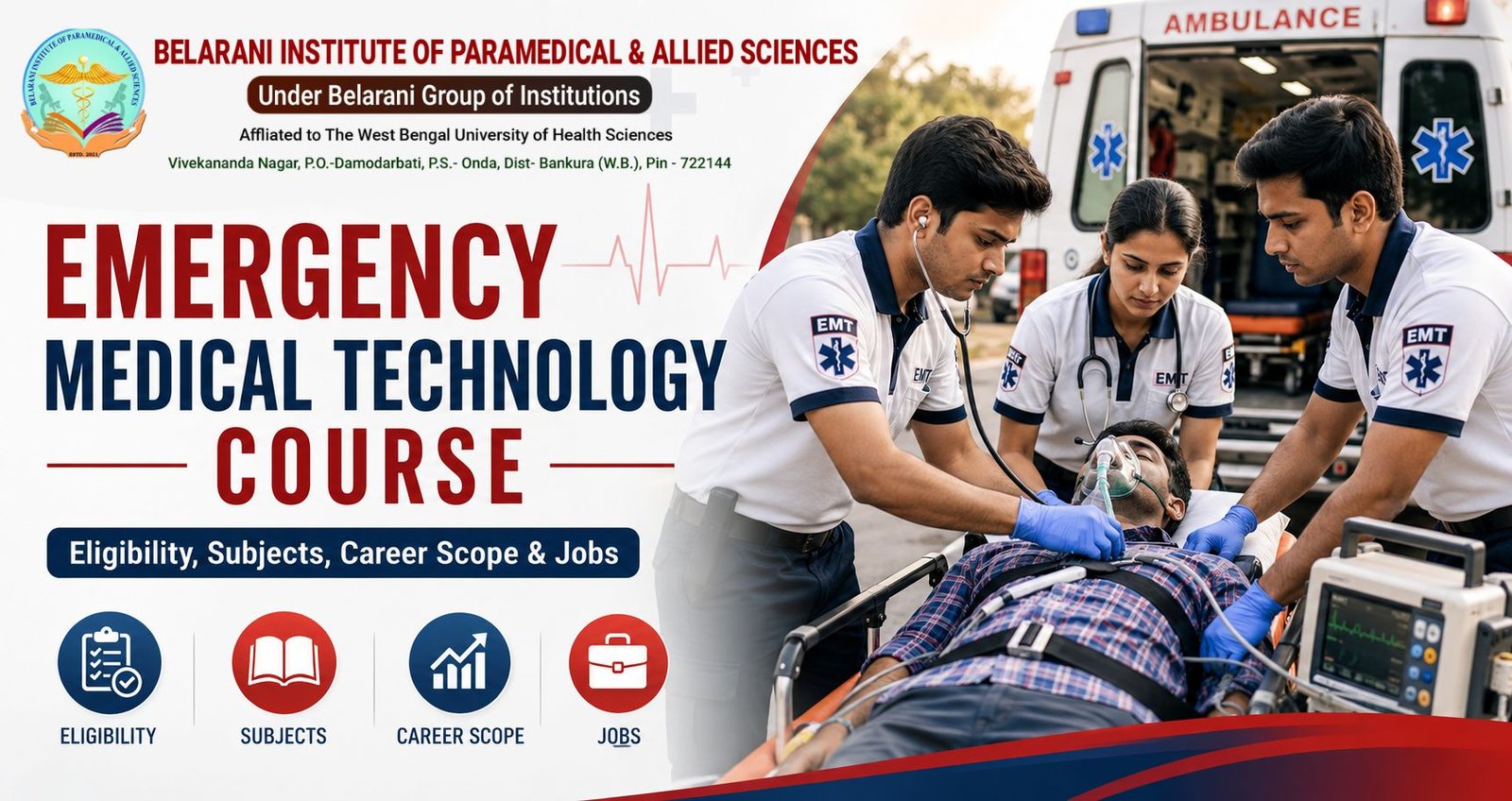
Healthcare emergencies require quick decisions, coordinated teamwork, and trained professionals who can provide timely support before and during hospital treatment. For students interested in emergency healthcare, the Emergency Medical Technology Course can offer a specialised pathway into the rapidly developing allied healthcare sector.
Emergency medical technology focuses on the knowledge and practical skills required to support patients during urgent and emergency situations. Depending on the programme, students may learn about emergency assessment, basic life support, patient transportation, trauma care, monitoring equipment, first aid, and coordination with emergency healthcare teams.
If you are searching for an Emergency Medical Technology Course after 12th, this guide explains eligibility, subjects, duration, practical training, career scope, job opportunities, and important factors to consider before choosing an institute.
What Is an Emergency Medical Technology Course?
An Emergency Medical Technology Course is designed to prepare students for technical and supportive roles in emergency and pre-hospital healthcare environments. Emergency medical professionals may assist healthcare teams in responding to urgent medical conditions, accidents, injuries, and other situations requiring immediate attention.
The curriculum can combine classroom education with practical training. Students may learn how to assess patients, recognise emergency conditions, assist with first aid and basic life support, use monitoring equipment, maintain emergency supplies, and follow appropriate safety and communication procedures.
The exact scope of practice depends on the qualification, institution, employer, and applicable healthcare regulations.
Why Choose Emergency Medical Technology?
Emergency healthcare is a field where every minute can matter. Students who enjoy working in dynamic environments and want to contribute to patient care may find this specialisation interesting.
Some potential benefits include:
- Specialised education in emergency healthcare
- Practical and skill-oriented learning
- Exposure to emergency response procedures
- Opportunities across hospitals and emergency services
- Development of teamwork and communication skills
- Scope for further education and professional development
However, students should understand that emergency healthcare can be demanding and requires discipline, emotional resilience, attention to detail, and the ability to follow protocols.
Emergency Medical Technology Course After 12th
Students who have completed Class 12 can explore emergency medical technology programmes depending on the eligibility criteria of the institution.
Many healthcare-related programmes consider candidates from the Science stream, particularly students who have studied subjects such as Physics, Chemistry, and Biology. However, eligibility varies according to the specific programme.
Before applying, students should check:
- Class 12 subject requirements
- Minimum qualifying marks
- Age criteria
- Admission procedure
- Entrance examination requirements, if applicable
- Course duration
- Affiliation or recognition
- Practical and clinical training provisions
Because admission rules can change, candidates should confirm the latest requirements directly with the institution before admission.
Subjects in Emergency Medical Technology Course
The syllabus varies between institutions, but an Emergency Medical Technology Course may include subjects and training areas such as:
Anatomy and Physiology
Students learn about the structure and functioning of the human body. This foundation helps them understand how injuries, illnesses, and emergencies can affect different body systems.
First Aid and Basic Life Support
Students may receive training in fundamental emergency response procedures, including first aid and basic life-support principles under appropriate supervision.
Emergency Patient Assessment
This area introduces students to the systematic assessment of patients and recognition of signs that may indicate an urgent medical condition.
Trauma and Emergency Care
Students learn about supporting patients with injuries and trauma while following established emergency protocols and working as part of a healthcare team.
Medical Equipment and Monitoring
Students may learn about commonly used emergency equipment and patient-monitoring devices, along with appropriate safety and handling procedures.
Patient Transportation
Safe movement and transportation of patients can be an important part of emergency care. Students may learn principles of patient positioning, transfer, communication, and safety.
Emergency Department Procedures
Training may introduce students to emergency department workflows, documentation, infection-control practices, communication, and coordination with healthcare professionals.
Importance of Practical Training
Emergency healthcare cannot be learned effectively through theory alone. Practical training helps students develop confidence in applying procedures and responding appropriately within controlled learning environments.
When selecting an institute, students should look for:
- Skills laboratories
- Practical demonstrations
- Simulation-based learning where available
- Clinical exposure
- Emergency-care training
- Experienced faculty
- Internship opportunities
Hands-on learning can help students understand how emergency teams coordinate their responsibilities while maintaining patient safety.
Career Scope After Emergency Medical Technology Course
After completing an appropriate qualification, graduates may explore opportunities in healthcare settings where emergency and patient-support services are provided.
Potential workplaces may include:
- Government hospitals
- Private hospitals
- Emergency departments
- Trauma centres
- Ambulance and emergency response services
- Clinics and healthcare centres
- Disaster-response organisations
- Healthcare support services
Depending on the qualification and employer requirements, possible roles may include Emergency Medical Technician, Emergency Care Assistant, Ambulance Technician, Emergency Department Support Staff, or other allied healthcare positions.
Job titles, responsibilities, and permitted clinical activities depend on the specific qualification and applicable regulations.
Skills Required for Emergency Medical Technology
A successful emergency healthcare professional needs more than technical knowledge. Important skills include:
Quick decision-making: Emergency situations can change rapidly, requiring professionals to remain alert and follow established protocols.
Communication: Clear communication with patients, families, doctors, nurses, ambulance teams, and other professionals is essential.
Teamwork: Emergency care is collaborative, so students need to understand how to work effectively within a healthcare team.
Attention to detail: Patient information, vital signs, equipment, and documentation need careful attention.
Professional discipline: Emergency professionals must follow safety, infection-control, ethical, and clinical procedures consistently.
Emergency Medical Technology Course: Diploma or Degree?
Students may find emergency medical technology programmes at different qualification levels. A diploma may offer focused professional training, while a bachelor’s programme can provide broader undergraduate education.
The better option depends on your academic goals, eligibility, career plans, course recognition, duration, and future education opportunities.
Before choosing a programme, compare the syllabus, practical exposure, internship structure, recognition, faculty, facilities, and overall costs.
How to Choose the Right Institute?
Choosing an institute is an important step in building your allied healthcare career.
Check Recognition and Affiliation
Make sure the course has the appropriate affiliation or recognition applicable to the programme.
Examine Practical Facilities
Ask whether students receive regular practical training and access to suitable skills laboratories or clinical environments.
Review the Curriculum
Look for a curriculum covering emergency assessment, basic life support, trauma care, patient handling, equipment, safety, and other relevant areas.
Consider Clinical Exposure
Exposure to professional healthcare environments can help students understand real-world emergency workflows.
Ask About Internship Opportunities
A structured internship can provide valuable practical experience under appropriate supervision.
FAQs:
Is Emergency Medical Technology a good career option?
It can be suitable for students interested in emergency healthcare, patient support, teamwork, and fast-paced clinical environments. Students should understand the responsibilities and demands of emergency care before choosing the field.
Can I pursue Emergency Medical Technology after 12th?
Yes, students who meet the eligibility requirements of the selected programme can explore emergency medical technology courses after Class 12.
What does an Emergency Medical Technician do?
An Emergency Medical Technician generally provides emergency and pre-hospital support within the scope of their training and applicable regulations. Responsibilities can include patient assessment, first aid, basic life support, safe transportation, monitoring, and communication with healthcare teams.
Where can Emergency Medical Technology professionals work?
Career opportunities may exist in hospitals, emergency departments, trauma centres, ambulance services, healthcare organisations, and other emergency-care environments.
Start Your Career in Emergency Healthcare
The Emergency Medical Technology Course can provide a focused pathway for students who want to develop skills for emergency and allied healthcare services. With the right combination of theoretical education, practical training, clinical exposure, and professional discipline, students can prepare for meaningful roles supporting patients during urgent situations.
If you are looking for an Emergency Medical Technology Course in West Bengal, explore the programmes at Belarani Institute of Paramedical & Allied Sciences. Review the eligibility criteria, curriculum, practical facilities, training opportunities, affiliation, and admission process before making your final decision.
Choose the right training today and take your first step towards a skilled career in emergency healthcare.
Read More: